
Highlights:
Issue 8 - August 2025


Issue 11 Article 3
Hepatocellular Carcinoma: Pathogenesis, Clinical Features, and Emerging Therapies
26/1/26
By:
Liu Yu An
Edited:
Elijah Chew Ze Feng
Tag:
Anatomy and Pathology
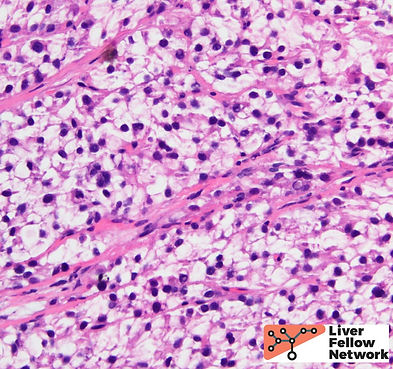
Hepatocellular carcinoma — or HCC — is unfortunately the most common type of liver cancer and causes the vast majority of liver cancer-related deaths. It’s responsible for around 90% of primary liver tumors. And the worst part? It’s often discovered late. That’s partly because early HCC often doesn’t cause many symptoms, and partly because it's deeply linked to long-standing liver damage — especially things like cirrhosis and chronic inflammation. Even though doctors are getting better at catching it early, it still remains extremely hard to treat once it’s more advanced. Resistance to drugs and high rates of recurrence continue to make managing this disease very difficult.
How HCC Develops: A Mix of Chronic Damage and DNA Trouble
Most HCC cases start after years of stress on the liver — not one single cause, but rather a mix of inflammation, cell turnover, and eventually, mutations that push cells over the edge. Chronic hepatitis B or C infections are common triggers, but so is fatty liver disease (NAFLD), especially with the global rise in obesity and diabetes. Cirrhosis, the irreversible scarring and architectural distortion of the liver, is the final step in many of these cases — it sets the stage for mutations to take hold (Llovet et al., 2021).
One of the big players in HCC is the gene TP53. When this tumor suppressor gene mutates, it stops doing its job, which usually involves basically making damaged cells die before they multiply and cause trouble (Zucman-Rossi et al., 2015). Another common mutation is in CTNNB1, which affects the WNT/β-catenin pathway — that one helps tumors grow and ignore usual stop signals for mitosis (Gao et al., 2019). There's also TERT promoter mutations that help cancer cells live longer by keeping their telomeres (bits of DNA at the end of chromosomes that prevent their degradation) from shrinking, sort of like giving them an endless lifespan (Nault et al., 2013).
Apart from these genetic factors , HCC tumors also change how cells handle energy. They rely more on glycolysis, the rapid breakdown of glucose to generate energy even in the presence of oxygen, (the Warburg effect) and rewire how they process fats and sugars by increasing glucose synthesis and diverting carbon from normal energy storage to lipid synthesis. This kind of metabolic reprogramming helps them survive in a liver that’s already been damaged and starved of nutrients (Pavlova & Thompson, 2016).
How It Shows Up (Or Sometimes Doesn’t)
One of the trickiest things about treating HCC is that it tends to grow under the radar. Many people don’t feel anything at first — no pain, no warning signs — and by the time something seems off, the disease has already progressed (Marrero et al., 2018).
In later stages, HCC often invades nearby structures, especially the portal vein. That’s a major blood vessel going into the liver, and once the tumor gets into it, the consequences are serious — such as liver failure, fluid buildup (ascites), and sometimes even spreading to other organs (Kudo, 2020).
Treatment Options: Some Old, Some Newer
There used to be very few treatments for advanced HCC. But now, the landscape is changing, bit by bit. One of the current mainstays is sorafenib, a tyrosine kinase inhibitor (TKI) that targets blood vessel growth. It doesn’t cure the disease, but it can slow things down and improve survival a little (Llovet et al., 2008) by reducing blood supply to tumour cells. A newer drug, lenvatinib, works in a similar way. Cabozantinib, another TKI, blocks receptors in the MET and VEGFR signal pathways and has shown some improvement in how long patients stay progression-free (Abou-Alfa et al., 2018).
But the really big shift came with immunotherapy. The combination of atezolizumab and bevacizumab — one targets PD-L1 to restore anti-tumour immune responses, the other blocks VEGF-mediated blood vessel growth — has actually outperformed sorafenib in clinical trials for first-line treatment (Finn et al., 2020). Some regimens also use ipilimumab and nivolumab, two checkpoint inhibitors that help the immune system attack the cancer more aggressively (Yau et al., 2020). How so?
Researchers are also starting to look at the tumor’s microenvironment — the cells and tissue around the tumor that help protect it. If we can disrupt that support system, or exploit the tumor’s odd metabolism, newer drugs might become more effective (Zhang et al., 2021).
Wrapping Up
HCC is still one of the more stubborn cancers out there. It’s shaped by a mix of inflammation, DNA changes, immune evasion, and strange metabolic shifts. For years, options were limited, and survival rates were bleak. But the past few years have seen real progress — especially with targeted drugs and immune-based treatments. It's not perfect, and recurrence remains a big issue, but at least there’s a growing toolkit now. As more is understood about the biology behind it — and how each patient’s tumor behaves — treatments will hopefully get even more personalized and effective.
References
Abou-Alfa, G. K., et al. (2018). Cabozantinib in advanced hepatocellular carcinoma. New England Journal of Medicine, 379(6), 541-552.
Bruix, J., et al. (2017). Regorafenib for hepatocellular carcinoma progressing on sorafenib. Lancet Oncology, 18(1), 82-96.
Finn, R. S., et al. (2020). Atezolizumab plus bevacizumab for HCC. New England Journal of Medicine, 382(20), 1894-1905.
Gao, Q., et al. (2019). Proteogenomic characterization of hepatocellular carcinoma. Cell, 179(5), 1240-1255.
Kudo, M. (2020). Treatment of hepatocellular carcinoma with portal vein tumor thrombosis: Japanese experience. Liver Cancer, 9(4), 357-374.
Llovet, J. M., et al. (2008). Sorafenib in advanced hepatocellular carcinoma. New England Journal of Medicine, 359(4), 378-390.
Llovet, J. M., et al. (2021). Hepatocellular carcinoma. Nature Reviews Disease Primers, 7(1), 6.
Marrero, J. A., et al. (2018). Diagnosis, staging, and management of hepatocellular carcinoma: 2018 practice guidance by AASLD. Hepatology, 68(2), 723-750.
Nault, J. C., et al. (2013). TERT promoter mutation is an early genetic event of hepatocarcinogenesis. Nature Communications, 4, 2218.
Pavlova, N. N., & Thompson, C. B. (2016). Metabolic adaptation in cancer. Cell Metabolism, 23(3), 437-447.
Yau, T., et al. (2020). Nivolumab plus ipilimumab in advanced hepatocellular carcinoma (CheckMate 040): outcomes in patients previously treated with sorafenib. Journal of Clinical Oncology, 38(30), 3456-3467.
Zhang, Q., et al. (2021). Landscape and dynamics of single immune cells in hepatocellular carcinoma. Cancer Cell, 39(10), 1262-1276.
Zucman-Rossi, J., et al. (2015). Genetic landscape and biomarkers of hepatocellular carcinoma. Gastroenterology, 149(5), 1226-1239.
Latest News